HPCSA CPD Requirements for Annual Registration Renewal


HPCSA CPD requirements set the rules for earning CEUs, recognising accredited activities, and maintaining professional registration.
The Health Professions Council of South Africa (HPCSA) is the statutory body established under the Health Professions Act 56 of 1974 to regulate health professions in South Africa. It sets professional standards, registers practitioners, oversees education and training requirements, and enforces ethical conduct. Registration with the HPCSA is a legal prerequisite for practising within any of the professions that fall under its jurisdiction. Its mandate centres on public protection, professional accountability, and maintaining minimum standards of competence across all regulated disciplines.
Continuing Professional Development (CPD) forms part of that regulatory function. The HPCSA requires registered practitioners to accumulate Continuing Education Units within defined cycles to ensure that knowledge and clinical competence remain current. Healthcare standards, clinical guidelines, technologies, and legal frameworks change over time. CPD provides a measurable system for ongoing education, reinforcing ethical obligations and safeguarding the public from outdated or unsafe practice. Compliance with CPD is therefore not optional; it is a condition of continued registration and lawful practice.

A Brief Overview of HPCSA CPD Requirements
The Health Professions Council of South Africa requires every registered practitioner to accumulate a prescribed number of Continuing Education Units (CEUs) within a defined CPD cycle. The required total differs by professional board and registration category. Most boards require a combination of clinical CEUs and a separate allocation in ethics, human rights, or medical law. Both categories must be satisfied within the cycle. Accumulating sufficient clinical points without meeting the ethics requirement does not constitute compliance.
Only activities accredited by a recognised HPCSA-accredited provider qualify. Each activity must carry a valid accreditation number and specify the number of CEUs awarded. Points are granted only upon successful completion of the activity, which usually includes a formal assessment component. Attendance alone is insufficient where assessment is required.
HSTCSA submits the names of all practitioners who complete CPD activities on a weekly basis, thereby ensuring a streamlined and hassle-free compliance process.
The HPCSA conducts random audits, during which selected practitioners are required to submit their CPD portfolios for verification. The portfolio must accurately reflect the correct allocation of Continuing Education Units (CEUs) across the required categories and fall within the applicable CPD cycle.
While the Council does not require the routine submission of CPD certificates during annual renewal, practitioners must be able to demonstrate compliance if selected for audit.
Failure to meet CPD requirements may result in administrative penalties, conditions being placed on registration, or suspension until the shortfall is remedied. The Council’s focus is evidentiary compliance: accredited activities, correct CEU allocation, documented proof, and completion within the prescribed cycle.
Why Continuing Professional Development is Necessary
Continuing Professional Development is necessary because initial qualification does not guarantee lifelong competence. Registration confirms that a practitioner met the required standard at a specific point in time. Clinical practice, however, does not remain static. Treatment protocols are revised, diagnostic criteria are refined, pharmacological guidance changes, and ethical and legal obligations develop. Without a formal requirement to remain current, knowledge and clinical judgment would gradually fall out of alignment with accepted standards.
CPD establishes a structured mechanism for maintaining competence. Through accredited activities, defined learning outcomes, and assessment requirements, practitioners are required to engage with updated clinical and professional content. The allocation of units across clinical and ethical categories reinforces both technical proficiency and professional responsibility. Audit processes add accountability, ensuring that compliance is demonstrable rather than assumed.
The underlying rationale is public protection. Patients rely on the assurance that registered practitioners are practicing according to current standards. CPD reduces the risk of outdated practice, strengthens decision-making, and supports consistent ethical conduct. It is therefore a regulatory safeguard designed to preserve both professional credibility and patient safety.

Can You Obtain CPD Points Online?
The HPCSA recognizes accredited online CPD activities, provided they are approved by the relevant professional board and issued through an authorized provider.
Online CPD typically involves structured learning material followed by a knowledge assessment. Units are awarded once the required pass mark is achieved, and a certificate reflecting the accreditation reference and CEU allocation is issued. The format of delivery does not matter as much as formal accreditation, verifiable completion, and correct categorisation of the units earned.
An accredited provider will display a valid HPCSA accreditation number linked to each CPD activity. This number confirms that the specific course, webinar, or module has been reviewed and approved for a defined number of Continuing Education Units. The accreditation reference should appear on the course information page and on the certificate issued after completion.
You may also verify accreditation by requesting the provider’s approval documentation or confirming the reference number against the relevant professional board’s published list of accredited providers, where available. If a provider cannot supply a formal accreditation number tied to the activity, the units are unlikely to be recognised by the council for compliance purposes.
Adopting a Structured Approach to Staying CPD Compliant
Maintaining CPD compliance is easier when point accumulation is planned rather than reactive to an upcoming deadline for submission. A structured system allows practitioners to earn accredited CEUs consistently throughout the year, track progress, and retain documentation in a centralised format.
At HSTCSA, we provide subscription-based CPD platforms designed to support this approach.
CPD Scholar – Medical HUB
The CPD Scholar – Medical HUB is an annual CPD subscription designed for healthcare practitioners who require accredited, audit-ready CEUs across a broad clinical scope. It provides access to structured learning activities aligned with professional board requirements under the Health Professions Council of South Africa.
Each activity includes:
- Accredited CEUs clearly indicated per module
- A formal assessment component with a defined pass mark
- Immediate certificate issuance upon successful completion
- Downloadable documentation suitable for audit submission
The platform is built around journal-based learning and structured quizzes. This format allows practitioners to engage with current clinical content, complete assessment-based evaluations, and earn recognised CEUs in a measurable way.
Because access runs on an annual subscription model, practitioners can distribute their CPD activity throughout the year. The dashboard environment allows users to monitor completed activities and request a CEU tally when preparing for their annual renewal.
For practitioners asking how to get CPD points online in a manner that meets Council standards, the Medical HUB provides a clear pathway: accredited content, assessed participation, and verifiable certification.
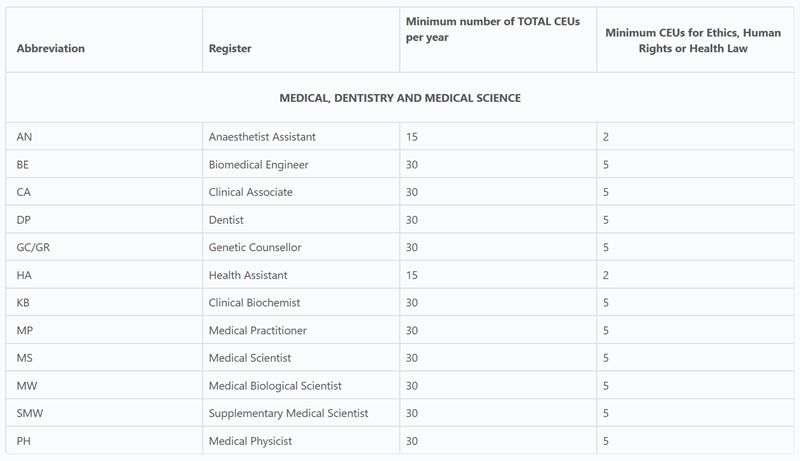
The CPD Scholar – Medical HUB is best suited for the following practitioners:
CPD Scholar – Emergency Care HUB
The CPD Scholar – Emergency Care HUB follows the same structured compliance framework but focuses specifically on emergency and acute care disciplines. It is designed for practitioners working in pre-hospital services, emergency departments, critical care units, and other high-acuity environments.
Content within this HUB is relevant to emergency clinical practice and includes:
- Accredited emergency-focused learning material
- Structured assessment-based quizzes
- Recognised CEUs awarded upon successful completion
- Issued certificates for documentation and audit purposes
The Emergency Care HUB allows practitioners in acute settings to earn CPD through clinically relevant subject matter rather than generic modules. This supports both compliance and practical knowledge reinforcement within their field of practice.
As with the Medical HUB, the subscription model enables year-round access. Practitioners can complete activities according to their schedule, accumulate CEUs steadily, and maintain documentation without relying on external events or ad hoc courses.
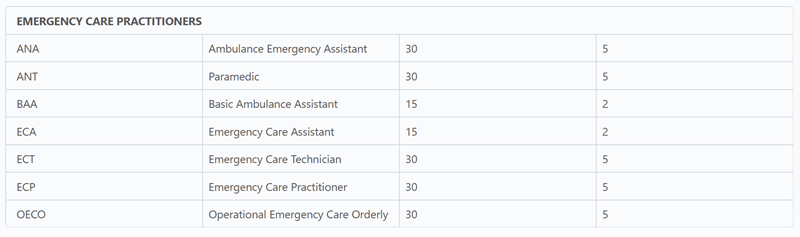
The CPD Scholar – Emergency Care HUB is best suited for the following practitioners:
Pit Crew Rapid Sequence Intubation: A Team Approach – Online Course
The Pit Crew – Rapid Sequence Intubation: A Team Approach is a structured, assessment-based programme focused specifically on high-performance airway management in emergency and critical care environments.
It is designed for practitioners working in pre-hospital services, emergency departments, intensive care units, and aeromedical settings where coordinated team-based RSI is essential for patient safety and optimal outcomes.
Content within this CPD activity includes:
- Evidence-based principles of team-based Rapid Sequence Intubation
- Structured role allocation using the Pit Crew model
- Human factors and communication strategies in high-acuity scenarios
- Safety checklists and performance optimisation frameworks
- Assessment-based quizzes to reinforce learning outcomes
- Recognised CEUs awarded upon successful completion
- Issued certificates for documentation and audit purposes
This activity allows practitioners to earn CPD through clinically relevant, practice-focused content rather than generic theoretical modules. It supports both regulatory compliance and the reinforcement of structured airway management principles within real-world operational contexts.
Delivered fully online, the course enables flexible completion according to the practitioner’s schedule while maintaining academic integrity and measurable learning outcomes.
The Pit Crew RSI CPD activity is best suited for:
- Advanced Life Support practitioners
- Emergency Care Practitioners (ECPs)
- Critical Care Paramedics
- Emergency Department physicians and nurses
- Critical Care clinicians involved in airway management
HSTCSA – HPCSA Accredited Online CPD Courses
HSTCSA provides accredited, assessment-based Continuing Professional Development (CPD) through our structured CPD Scholar HUBs and specialised clinical courses. Each completed CPD activity awards recognised CEUs, with issued certification suitable for HPCSA audit submission.
In addition to our CPD Scholar HUBs, we offer focused clinical programmes such as the Pit Crew – Rapid Sequence Intubation: A Team Approach. This evidence-based course is designed for practitioners working in emergency and critical care environments, reinforcing structured team-based RSI principles aligned with contemporary best practice. Successful completion awards recognised CEUs while strengthening clinical performance in high-acuity settings.
Beyond online CPD, HSTCSA also delivers internationally aligned life support training, including:
These programmes follow American Heart Association-aligned standards and focus on evidence-based algorithms, team dynamics, and high-performance resuscitation. They are globally recognised and suitable for practitioners seeking both local compliance and international career mobility.
Our structured learning ecosystem enables healthcare professionals to maintain regulatory compliance, strengthen clinical competence, and remain aligned with current best practice — all within a streamlined and professionally managed system.
Visit our Healthcare Professionals Community page to learn more about becoming a CPD Scholar and accessing our full suite of accredited and internationally aligned training programmes.