Medication Errors During Emergency Resuscitation


Medication Errors During Emergency Resuscitation
Medication errors are well recognised during emergency resuscitation and have the potential to cause significant patient harm (Flannery and Parli, 2016). However, medication errors do not invariably result in an adverse outcome. In the case presented below, the resuscitation team inadvertently made a medication error that may paradoxically have contributed to the patient’s survival, a potentially lifesaving error, but an error nonetheless (Hans et al., 2024).
A patient goes into cardiac arrest during chemotherapy-induced anaphylaxis. The resuscitation team works the code. Epinephrine is drawn up and administered. The patient develops pulseless ventricular tachycardia, is defibrillated, and achieves return of spontaneous circulation with profound hypotension. Only during the post-event debrief does the team establish what happened: the physician had ordered epinephrine using the hospital’s standard 1:10,000 concentration (0.1 mg/mL), while the EMS team stocked the 1:1,000 formulation (1 mg/mL). No one caught the discrepancy during the resuscitation and the patient received 10 mg of epinephrine instead of 1 mg. The outcome, in this documented case, was survival without neurological injury. The authors note that the massive overdose may have incidentally converted a non-shockable rhythm into a shockable one. It was a potentially lifesaving error (Hans et al., 2024).
This is a real case, published in the International Journal of Emergency Medicine in 2024 (Hans et al., 2024). Although the outcome was unusual, the mechanism of error was not. Errors involving epinephrine concentration, dose and route, together with communication failures during emergency resuscitation, are well documented in the literature (Kanwar et al., 2010; Flannery and Parli, 2016). What distinguishes this case is that the error did not result in catastrophic harm and may, paradoxically, have contributed to a favourable outcome (Hans et al., 2024).

How Often Do Medication Errors During Emergency Resuscitation Happen?
The honest answer is that nobody is sure, and the variation in reported rates reflects why.
A systematic review published in the American Journal of Critical Care in 2016, searching PubMed/MEDLINE for studies covering the period 1966 to November 2014, found that reported rates of medication errors during cardiopulmonary resuscitation and surrounding events ranged from less than 1% to 50%, depending entirely on how the researchers looked for them (Flannery and Parli, 2016):
- Studies using database mining produced low rates.
- Studies using prospective observation of actual clinical practice produced rates toward the upper end.
- Simulation-based studies produced a wide range, depending on whether researchers were measuring ordering errors, preparation errors, administration errors, or all three
The methodological problem is not trivial. Retrospective database and incident-reporting studies can identify only errors that are recognised and subsequently documented, creating the potential for substantial underestimation of medication errors during resuscitation (Flannery and Parli, 2016). This limitation is particularly important in the resuscitation environment, where high workload, time pressure, stress and multiple simultaneous clinical tasks create conditions in which errors may occur or go unrecognised (Liu et al., 2024). Simulation studies provide a valuable means of examining medication errors under controlled conditions, but they cannot completely reproduce the cognitive, environmental and clinical pressures of an actual resuscitation (Appelbaum et al., 2019). Prospective observation of real resuscitation events may therefore provide a more direct assessment of errors occurring in clinical practice, and studies using such approaches have reported some of the higher medication-error rates described in the literature (Flannery and Parli, 2016).
What Researchers Observed
One in Two Doses: What Prospective Observation Found
Some of the most concerning medication-error rates have emerged from prospective observation of actual emergency care. In a study conducted at a large tertiary academic medical centre, Gokhman et al. (2012) directly observed medication use during Medical Emergency Team responses involving 50 patients. Across 186 medication doses, the researchers identified a medication-error rate equivalent to approximately one error for every two doses administered when errors involving inappropriate aseptic technique were excluded. Of the remaining errors, prescribing errors were the most common, followed by administration technique, mislabelling, drug preparation and incorrect dose prescribing. Notably, 14% of errors were considered at least moderate in severity (Gokhman et al., 2012).
A separate BMJ Open study published in 2019, using video microanalysis of simulated paediatric resuscitations across 15 teams in a large English teaching hospital, found at least one medication error in every simulated case, and a large-magnitude or clinically significant error in 11 of 15 cases. Medication errors were observed in 29% of 180 simulated medication administrations, with 40% of those errors classified as moderate or severe (Appelbaum et al., 2019).
The majority of errors were introduced during drug preparation and administration rather than at the prescribing stage, a finding that shifts the risk profile from the physician writing the order to the nurse drawing up the drug (Appelbaum et al., 2019).
The Epinephrine Timing Question
Epinephrine is a cornerstone medication in adult cardiac arrest resuscitation. Current American Heart Association (AHA) guidelines recommend administration of epinephrine 1 mg intravenously or intraosseously every 3 to 5 minutes during cardiac arrest (Wigginton et al., 2025).
Existing clinical trials have used the 1 mg every 3 to 5 minute protocol; however, the optimal dosing interval, number of doses and maximum cumulative dose remain areas of uncertainty requiring further research (Wigginton et al., 2025).
What the Registry Data Shows
The registry data and the meta-analytic evidence point in different directions, and the clinical community has not resolved this.
On the registry side, a retrospective analysis of 25,095 adults with in-hospital cardiac arrest and non-shockable rhythms, drawn from the AHA’s Get With the Guidelines-Resuscitation database and published in the BMJ in 2014, found a stepwise decrease in survival with increasing time to first epinephrine dose. Compared to administration within 1 to 3 minutes, the adjusted odds ratio for survival dropped to 0.91 for 4 to 6 minutes, 0.74 for 7 to 9 minutes, and 0.63 for more than 9 minutes. Earlier is better, the registry suggests, at least for non-shockable rhythms (Donnino et al., 2014).
A separate registry analysis of 20,909 in-hospital cardiac arrests from 505 hospitals, also using the GWTG-Resuscitation data, published in Resuscitation in 2014, found the opposite direction for dosing intervals: longer average intervals between doses were associated with improved survival to hospital discharge. The authors proposed that more frequent dosing may reflect a more chaotic resuscitation, or that epinephrine’s vasoconstrictive effect carries diminishing or even harmful returns with repeated administration (Warren et al., 2014).
What the Meta-Analytic Evidence Adds
A 2023 systematic review and meta-analysis in the Journal of Clinical Medicine, covering three studies comparing different epinephrine administration intervals, found that neither administering epinephrine more frequently than the 3 to 5 minute guideline nor less frequently was associated with a statistically significant difference in favourable neurological outcome (Wongtanasarasin et al., 2023).
A 2026 systematic review and dose-response meta-analysis in Medicina, covering observational data for adult out-of-hospital cardiac arrest, found an association between increasing delays in epinephrine administration and poorer outcomes, supporting the earlier-is-better argument particularly for non-shockable rhythms (Ahn et al., 2026).
Taken together, the available evidence supports early epinephrine administration, particularly in patients presenting with non-shockable rhythms (Donnino et al., 2014; Ahn et al., 2026). However, the optimal interval between subsequent doses remains uncertain, with no clear evidence that administering epinephrine more or less frequently than the guideline-recommended 3–5-minute interval improves neurological outcomes (Wongtanasarasin et al., 2023). Observational evidence has also raised questions about repeated and cumulative epinephrine exposure, but the relationship between total dose and patient outcomes remains incompletely understood (Warren et al., 2014).
Why Do These Errors Happen?
The error rate literature consistently identifies the same cluster of contributing factors:
Authority gradient. Hierarchy within resuscitation teams can directly influence whether clinicians challenge potentially unsafe decisions. In a simulated resuscitation study, 50% of interprofessional teams followed an incorrect medication order issued by a senior physician confederate, while 23% complied without attempting to challenge or verify the order. The likelihood that team members would challenge the erroneous instruction was significantly influenced by the hierarchical demeanour of the perceived authority figure (Delaloye et al., 2020). This reluctance to question a senior clinician should therefore not be understood simply as an individual failure to speak up; authority gradients are a recognised patient-safety phenomenon capable of influencing communication, decision-making and the interception of clinical errors (Cosby and Croskerry, 2004).
Cognitive overload in a chaotic environment. Resuscitation requires clinicians to manage multiple competing tasks simultaneously, including airway management, rhythm recognition, chest compressions, vascular access, medication administration and team communication. This complex and time-critical environment creates substantial cognitive workload and stress, which can impair performance and increase vulnerability to error (Liu et al., 2024). Medication preparation and administration occur within this same high-pressure environment, creating multiple opportunities for medication error during resuscitation (Flannery and Parli, 2016).
Look-alike concentrations and medication storage. Epinephrine is available in different concentrations, including 1 mg/mL and 0.1 mg/mL, creating the potential for clinically significant dosing errors when the incorrect strength is selected. Confusion arising from different epinephrine concentrations and strength expressions has been associated with inadvertent overdose and potentially life-threatening adverse effects (Kanwar et al., 2010). Regulatory safety assessments have similarly identified epinephrine concentration and product-labelling conventions as potential contributors to medication error, reinforcing the importance of clear strength expression, differentiation and safe medication storage practices (FDA, 2014; FDA, 2024).
Neuromuscular blocking agents represent another particularly high-risk medication group. Accidental administration of these drugs in place of intended medications has resulted in death and serious permanent injury, with inadequate labelling and unsafe storage identified as important contributing factors. The Institute for Safe Medication Practices therefore recommends that all neuromuscular blocking agents be segregated, sequestered and clearly differentiated from other medications wherever they are stored, with their availability restricted to clinical areas where they are routinely required (ISMP, 2024).
Verbal orders without read-back. During resuscitation, medication orders may be communicated verbally in a time-critical and cognitively demanding environment. Without effective closed-loop communication, an incorrectly heard or interpreted order may proceed to preparation and administration without the ordering clinician recognising the discrepancy. Clear confirmation of the medication, dose, concentration and route therefore provides an important opportunity to identify errors before administration. Communication failures are recognised contributors to medication error during resuscitation (Flannery and Parli, 2016), while hierarchical authority gradients can further reduce the likelihood that team members will question or challenge potentially incorrect medication orders (Cosby and Croskerry, 2004; Delaloye et al., 2020).
Resource and staffing strain. Team composition, role allocation and provider experience can influence workload and stress during resuscitation, with limited staffing potentially increasing the demands placed on individual team members (Liu et al., 2024). These pressures may be amplified in resource-constrained environments. In South Africa, shortages of appropriately trained emergency personnel and material resources, inadequate equipment maintenance, limited opportunities for continuous training and inconsistent team leadership have been identified as barriers to the delivery of optimal cardiopulmonary resuscitation (Muthelo et al., 2023).
What Does This Mean for South African Emergency Medicine Practice?
There remains limited published South African evidence quantifying medication-error rates specifically during resuscitation. Medication-error rates reported in international studies should therefore be interpreted cautiously rather than assumed to directly represent the South African clinical environment, particularly given the resource, staffing and training challenges identified within some South African emergency care settings (Muthelo et al., 2023).
The underlying human-factor mechanisms associated with medication error may, however, have broader relevance across healthcare systems. Authority gradients can influence whether clinicians challenge potentially unsafe instructions (Cosby and Croskerry, 2004; Delaloye et al., 2020), while high workload and cognitive demands can impair performance during resuscitation (Liu et al., 2024). Confusion between medication concentrations provides an additional recognised mechanism for serious dosing error (Kanwar et al., 2010). Collectively, these findings suggest that medication safety during resuscitation depends not only on individual clinical knowledge, but also on team communication, workload, medication systems and the environment in which care is delivered.
These vulnerabilities may be particularly important in resource-constrained environments. South African research has identified shortages of appropriately trained emergency personnel and material resources, inadequate equipment maintenance, limited opportunities for continuous training and inconsistent leadership as barriers to optimal resuscitation practice (Muthelo et al., 2023). International evidence further demonstrates that team composition, role allocation and provider experience can influence workload and stress during resuscitation, potentially affecting the ability of clinicians and teams to perform reliably under pressure (Liu et al., 2024).
Structured Training as the Countermeasure
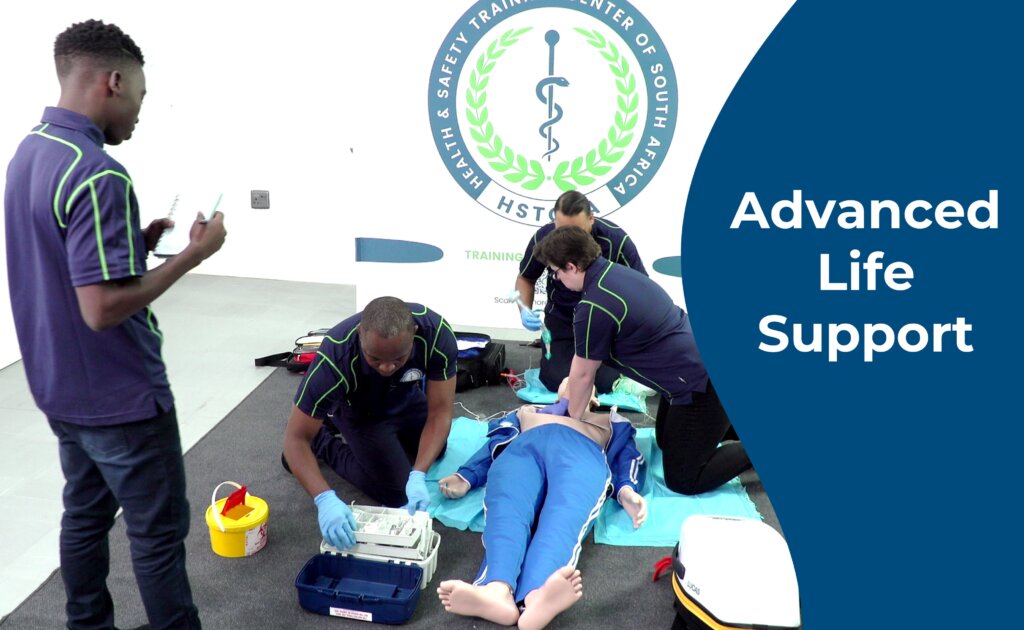
The failure points identified above can be addressed, in part, through structured, team-based resuscitation training. Such training provides an opportunity to practise both the technical and non-technical skills required to manage high-acuity events effectively.
Closed-loop communication requires verbal orders and instructions to be acknowledged and confirmed, helping ensure that the intended action has been correctly understood. Within a resuscitation team, clearly defined roles and responsibilities can further reduce ambiguity by assigning specific tasks, such as medication preparation, administration and timekeeping, to designated team members.
Repeated practice of resuscitation algorithms and team-based scenarios allows clinicians to become more familiar with expected actions and team behaviours before encountering them in a real emergency. This can reduce reliance on improvisation when clinicians are working under significant cognitive load and provides an opportunity to practise communication, leadership, role allocation, medication verification and appropriate challenge of potential errors.
These principles are incorporated into AHA ACLS training, where effective team dynamics and communication are taught alongside the clinical algorithms and technical skills required during resuscitation.
HSTCSA – AHA- Certified BLS and ACLS Training in South Africa
HSTCSA’s American Heart Association certification in the Advanced Cardiovascular Life Support (ACLS) course is a two-day programme delivering
- 30 HPCSA CEUs including 2 ethics CEUs,
- Covering ACLS algorithms,
- Drug administration protocols,
- Team communication, and
- Role assignment within the resuscitation team.
The Basic Life Support (BLS) course builds the foundational skills that ACLS builds on: high-quality CPR, defibrillation, and team-based response.
For healthcare professionals managing codes, the data on medication errors during resuscitation is an argument for more structure.
View our course calendar for upcoming BLS and ACLS training.
If you have any other queries, please contact us.